
Pulaski County Traffic Warrants Explained
A Pulaski County traffic warrant comes from court process, not from a driving-history check. Indiana Code 9-30-3-8 lets a court act when someone fails to appear or answer a traffic information and summons. The case file tells the real story. A judge may have issued a warrant, entered some other order, recalled it later, or reported a failure to appear. Money still showing due on a citation does not by itself mean an executable warrant exists. The Pulaski County Clerk of Courts keeps the county court files and traffic-infraction records, and the current trial venues are Pulaski Circuit Court and Pulaski Superior Court. The Indiana court directory lists no separate traffic or municipal court operating in Pulaski County. Check the citation, MyCase, the Clerk, or the issuing police agency to learn where the case was filed.
Pulaski County Traffic Warrant Search Numbers
Two numbers matter, and they mark different stages. The citation number sits on the ticket and may work in Indiana traffic ePay, while a filed court case carries a cause number used in MyCase and at the Clerk counter. Lose the ticket and the distinction bites hard: a payment search can fail even though a Pulaski County court file exists.
- Citation number
- The ticket identifier used in eligible traffic searches.
- Cause number
- The court case identifier required by the county payment route.
- Case event
- A docket entry that may note failure to appear, issue, service, or recall.
MyCase search tips say case-number searches skip hyphens and leading zeroes. County and court filters narrow broad party results in a Pulaski County search.
Checking for a Traffic Warrant
The Pulaski County Sheriff posts no official traffic-warrant list. The practical route works through every court and agency channel, with direct confirmation at the end.
- Gather the citation number, cause number if known, legal name, filing year, and county shown on the ticket.
- Use Indiana MyCase to locate the Pulaski County case and review its summary and events. It is a case portal, not an all-warrant search.
- For an eligible ticket, check Indiana traffic ePay by driver's-license number or by name and date of birth. Treat the result only as ticket and payment information.
- Confirm current warrant, hearing, and payment status with the Clerk at 574-946-3313 or the court named in the case. Ask the Sheriff separately about safe execution or surrender procedure.
The Clerk's public office sits in courthouse room 018. Circuit Court, room 225 in the Justice Center, uses 574-946-3851. Superior Court, on the Justice Center's second floor, uses 574-946-3371. Confirm the right counter and current hours before you travel. The Sheriff's published numbers are Main at 574-946-6655 and Admin at 574-946-0924, but the Pulaski County office runs no dedicated warrant line.
Pulaski County Traffic Warrant Payment Portal
The official state service can find and pay some eligible tickets. It does not say whether a Pulaski County traffic warrant is active. Some matters must go through another official route or straight to the court. When a ticket is missing or ineligible, the filed court record controls. The Indiana traffic ePay service is the official payment starting point.
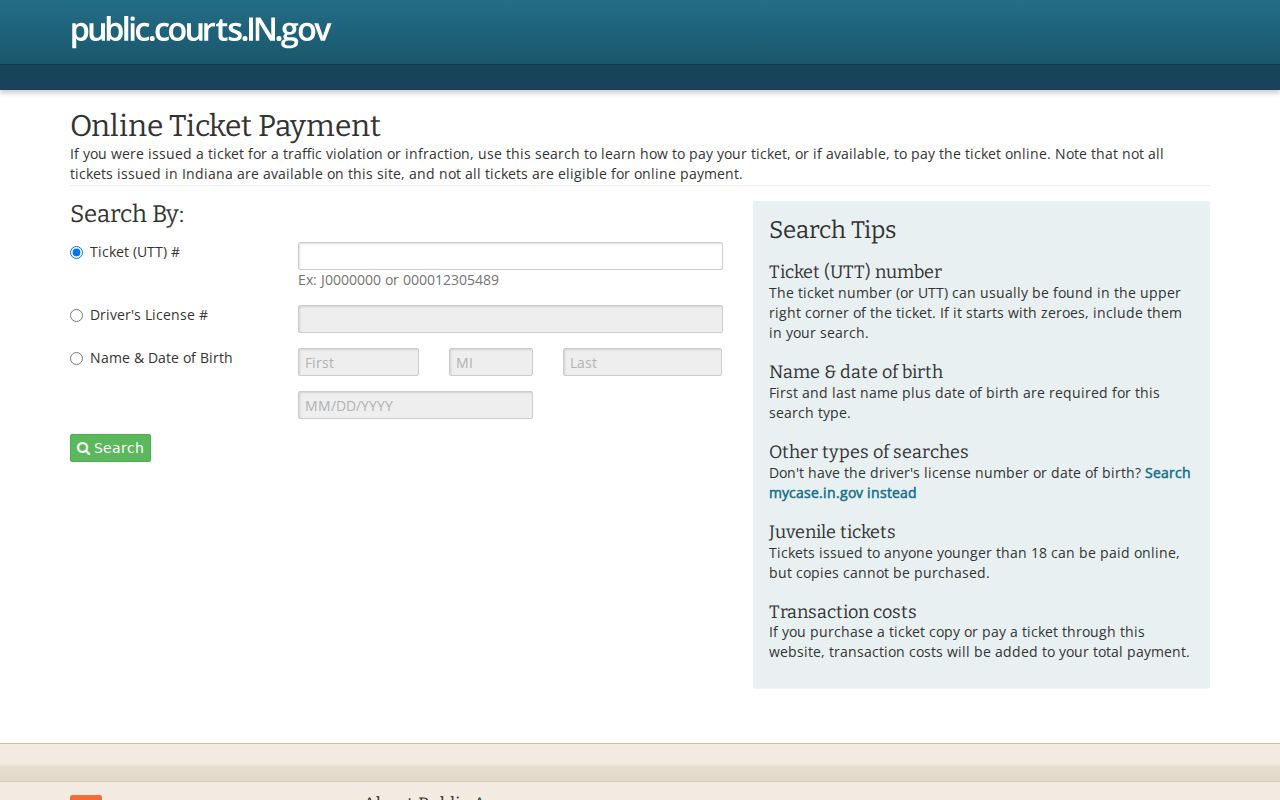
Paying online is one thing; changing a warrant order is a judicial act. The Indiana MyCase search tips explain citation and case searching for Pulaski County records.
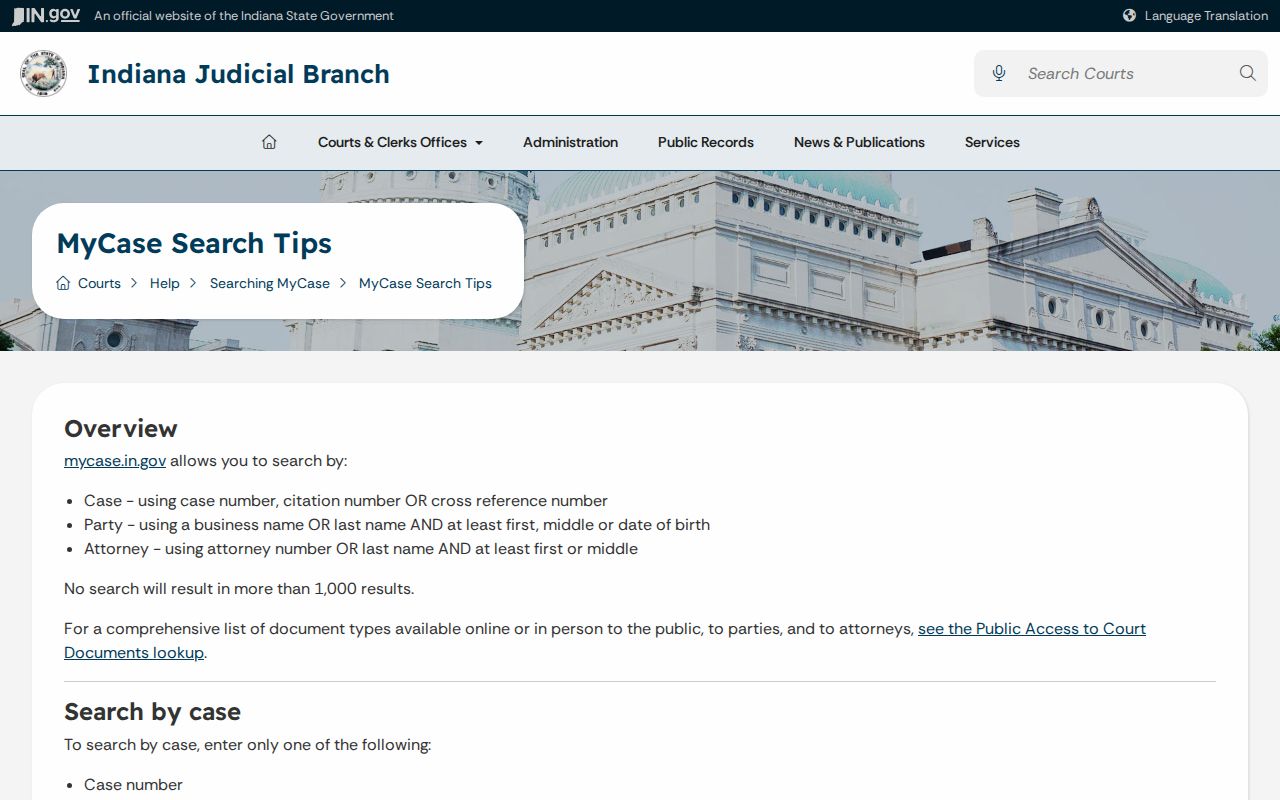
When the payment screen hides the related court case, that state guidance helps a Pulaski County reader find it.
Inside a Traffic Warrant Record
A public Pulaski County traffic case may show a docket event rather than a full warrant. Protected, sealed, expunged, or excluded material may not appear online. Each field still rests on court confirmation.
- Citation or cause number
- 66D01-YY-IF-000000 illustrates the format only; use the real number.
- Issuing court
- Circuit or Superior Court as shown in the case.
- Event and date
- May state failure to appear, warrant issued, served, or recalled.
- Offense
- The public infraction description.
- Money and status
- Payment entries may lag and do not prove warrant status.
- Next setting
- A hearing or directive in the latest available entry.
Medaryville Citations and Pulaski County Warrants
Medaryville Police Department appears on Indiana's list of agencies using the electronic Citation and Warning System, or eCWS. That shows participation in an electronic citation workflow. It does not create a public Medaryville warrant portal or prove a citation became a Pulaski County traffic warrant. The official eCWS agency list documents that participation.
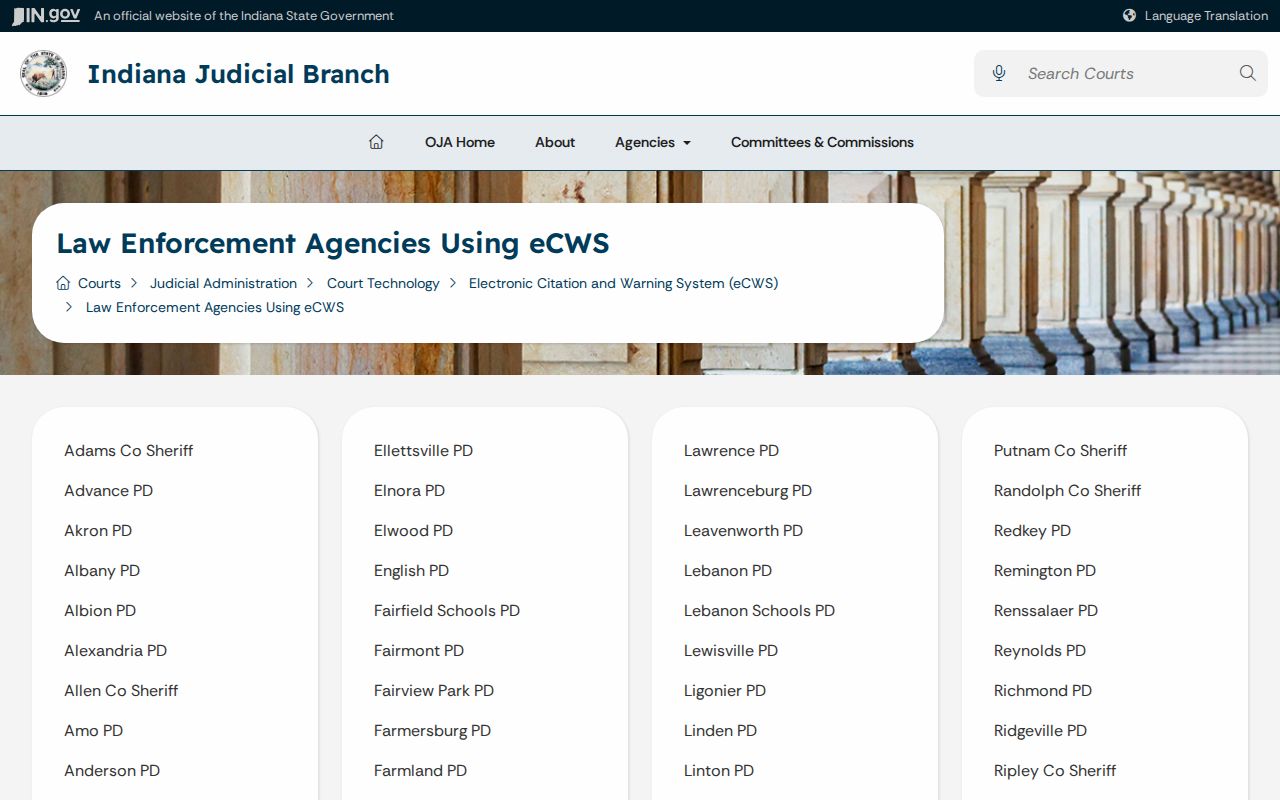
The electronic-citation fact is all that page proves. Court and Clerk channels still control any Pulaski County warrant confirmation.
How to Pay or Lift a Traffic Warrant
No single step clears every Pulaski County traffic order. The latest docket entry and the issuing judge control, and payment may resolve a balance while leaving a hearing or judicial recall open.
- Confirm the case and current order with the Clerk or issuing court before paying.
- Ask whether online payment is allowed and whether an appearance, motion, or counsel is required.
- Use only the court-directed route and retain the receipt and cause number.
- Ask when the court will enter a recall or compliance event and report any change to the Bureau of Motor Vehicles.
Important: Payment alone is not proof that a Pulaski County traffic warrant or failure-to-appear status has cleared.
The Clerk links a PayGov route and says a cause number is required. That does not make every fine, bond, or warrant matter payable online. Indiana State Police says it takes no ticket payments and sends a missing ticket to the county court.
Pulaski County Traffic Debt Is Not Warrant Proof
Indiana says unpaid amounts may be intercepted from a state tax refund, and the Department of Revenue applies a 10 percent processing fee. Collection is a financial consequence only. It does not show that a Pulaski County warrant exists or stays active. The official tax-refund garnishment page describes that process.
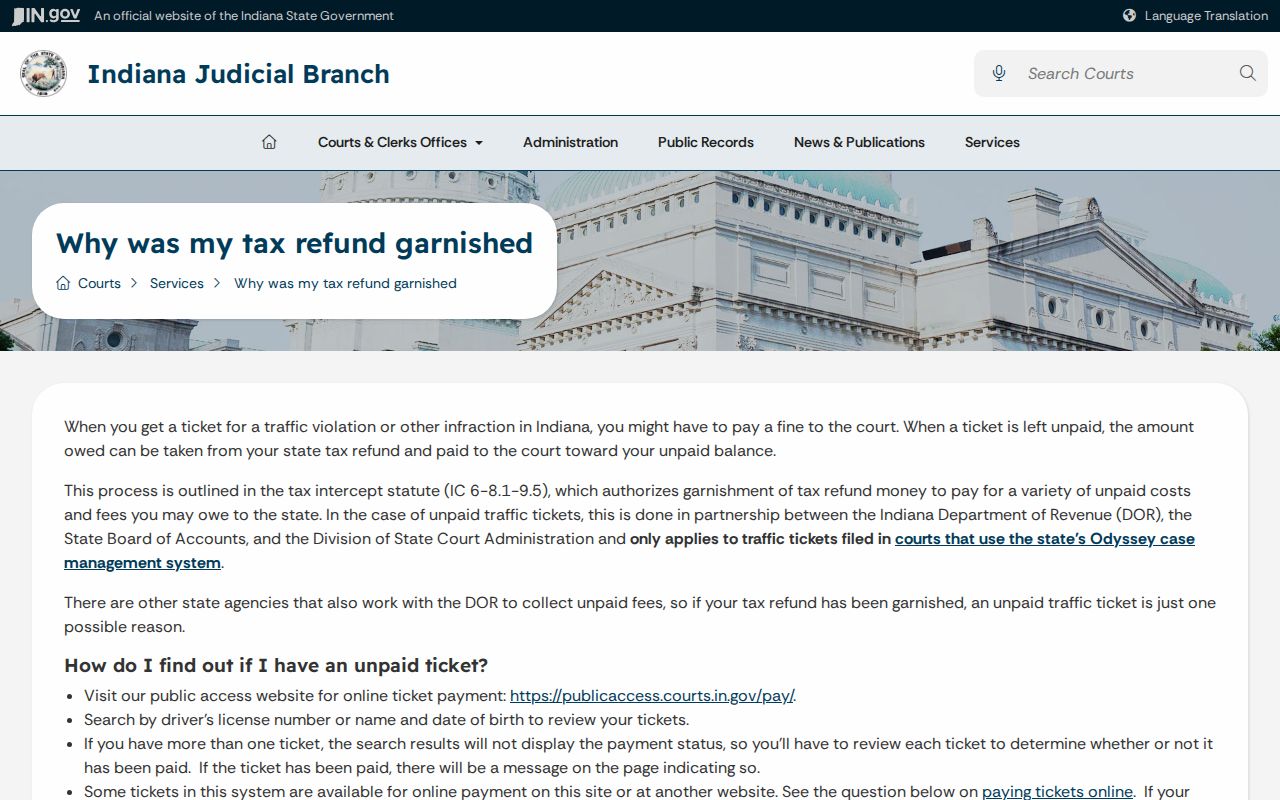
That page keeps court-debt collection separate from warrant status, which only the Pulaski County docket and court can confirm.
Traffic Warrants, FTA, and License Holds
One citation can spawn related but distinct records. Indiana law lets specified information reach the BMV through its statutory process, and court and BMV records can move on different timelines.
| Record | Source | Meaning |
|---|---|---|
| Traffic warrant | Issuing court | A judicial arrest order, if issued. |
| Failure to appear | Court docket | A missed response or setting and resulting court action. |
| BMV status | State system | A statutory consequence distinct from the live order. |
| Unpaid balance | Clerk or ePay | Money due, which alone does not establish a warrant. |
Ask the Pulaski County court what it will report after compliance, and when. An online receipt may not instantly change either record.
Pulaski County Traffic Warrant Record Access
Records that never reach MyCase still have a door. The Indiana Access to Public Records Act, Indiana Code 5-14-3, covers them. Pulaski County uses a request form for this. It asks for contact details, the department, a reasonably particular description, and a signature. Fees may apply. The form itself lists no fee schedule, no ID rule, no submission route, and no production deadline, so ask the office before you file. A focused request works best. Ask for a written policy on traffic failure-to-appear records, or for the Sheriff's publication practices on active warrant listings. Some things stay closed no matter how you ask. Court Access Rules 4 and 5 still protect certain court information, and a records custodian may redact or withhold material under law or court order. APRA does not compel instant release of a warrant packet either. For live warrant status, call the Clerk, the court, and the Sheriff directly. The broader Pulaski County warrant lookup walks through that same confirmation chain for any outstanding warrants.
Pulaski County Traffic Warrant Office Roles
A Pulaski County traffic warrant question rarely gets answered in one call. The police agency that wrote the citation does not control the judicial record, so one Pulaski County office may tell you only half of what you need. Start with the cause number and ask which court received it. Then ask what the latest order requires: payment, a hearing, a motion, or an appearance in person. The Clerk of Courts holds the file and the payment record, the judge controls the warrant itself, and the Sheriff handles service and safe surrender. Verify every contact on the official Clerk page, Circuit Court page, and Sheriff page. If a public event date clashes with a payment screen, give staff the real cause number and ask which later order controls. Write down the date and the Pulaski County office that answered, so an old online entry never gets mistaken for current status. Keep the citation number and the cause number separate, too, since each feeds a different official search field. Indiana State Police takes no traffic payments at all. That division of labor is exactly why a citation screen should never stand in for a judge's live order.
When the paper ticket is gone, give the legal name, the approximate date, the issuing agency, and the likely county, and ask whether staff can pull the citation or cause number. Never send sensitive identity data to an unverified address. If ePay finds no ticket, call the Clerk rather than repeating broad searches. MyCase results can hit a limit, and a narrow query helps you avoid matching a same-name case to your own matter. After you take the directed action, check the docket for a later event instead of trusting a receipt alone. Ask whether the court will enter a recall, quash, compliance, or hearing order, and when the related BMV report should change. Keep the citation, the receipt, any instructions, the office name, and the contact date. No automatic recall timetable, warrant-clearing fee, or local traffic bond schedule exists in Pulaski County.