
Pulaski County Arrest Warrants Explained
Indiana Code 35-33-2-1 sets out how a warrant gets issued. It covers charges filed after an indictment or an information, and it allows a probable-cause route when the defendant is not already in custody. Probable cause is the legal footing for the arrest request. An information is a formal charge a prosecutor files; an indictment is a grand jury's charging instrument. A Pulaski Circuit or Superior judge then issues the warrant, and the Sheriff or another authorized officer executes it. That split matters in practice. The Sheriff cannot recall a court order, and the Prosecutor is not a public status counter. In Pulaski County, the current docket and the signed order govern. Write down the date of confirmation, since an arrest warrant's status can shift after service, recall, a quash, or a new release order. If staff mention a later event, ask whether an official copy exists and whether any hearing is still pending. That small extra question keeps stale paperwork from being mistaken for the court's current word.
Pulaski County Arrest Warrant Basis
Indiana Code 35-33-5-2 sets the affidavit and particularity rules. An affidavit lays out sworn facts for the judge to review. The judge decides whether the legal standard is met. The written warrant then commands an arrest and an appearance in court. Access can shift while all this unfolds. The Court Report Handbook treats probable-cause and arrest-warrant records as generally open unless a judge closes them for a recognized reason like flight risk, danger, or an ongoing investigation. Sealed, confidential, expunged, and redacted are four different statuses in a Pulaski County file, not interchangeable labels.
Inside a Pulaski County Arrest Warrant
Indiana Code 35-33-2-2 lists what a written Pulaski County arrest warrant must contain, though a public docket may display only part of it.
| Identity | Name or description as authorized in the order. |
|---|---|
| Offense | Nature of the alleged charge, not a conviction. |
| Issuance | Date, county, and issuing court. |
| Authority | Judge or clerk signature required by law. |
| Command | Direction to arrest and bring the person before court. |
| Release | Bail amount if set and public. |
Some warrant data stays protected. Addresses, birth dates, Social Security numbers, victim details, and similar information do not belong in routine Pulaski County search fields.
Pulaski County Arrest Warrant Search
Start with Indiana MyCase and a cause number if you have one. The portal also searches by citation, cross-reference, party, or attorney. Narrow results to Pulaski County, Circuit 66C01 or Superior 66D01. Broad searches can hit the system's result limit. So add the county filter, the likely filing year, and the court whenever those facts are known. Case numbers work without hyphens or leading zeroes under the official search tips. Do not scrape results or assemble lists of private people. The proper aim of a Pulaski County warrant search is your own case or a relative's authorized matter. Note the cause number. Then get current confirmation from the court. A docket event alone is not the signed warrant. Ask the Clerk whether the warrant or probable-cause material is public, redacted, sealed, or just unavailable online. A missing document button does not settle that access question. Review charges, hearing entries, public bond terms, and linked filings. Look for issue, service, recall, quash, and release entries. MyCase is not the official record and has no all-warrant search. Confirm with the Clerk or the Pulaski County court itself.
- Identify the likely Pulaski case.
- Read the entire event sequence.
- Note the cause number and court.
- Confirm current status by phone.
- Ask about safe next steps.
Serving Arrest Warrants in Pulaski County
In Pulaski County, the Sheriff and other authorized officers may execute a valid warrant. Service can lead to custody, booking, a court appearance, and a release decision under the current order. No office promises where, when, or how a specific warrant will be served. The Sheriff's official page posts Dispatch/Main 574-946-6655, Admin 574-946-0924, Dispatch 574-946-4234, and Jail 574-946-3753. It names no warrant unit or dedicated line. Use those numbers for process questions. Treat the page as contact information, not a warrant list.
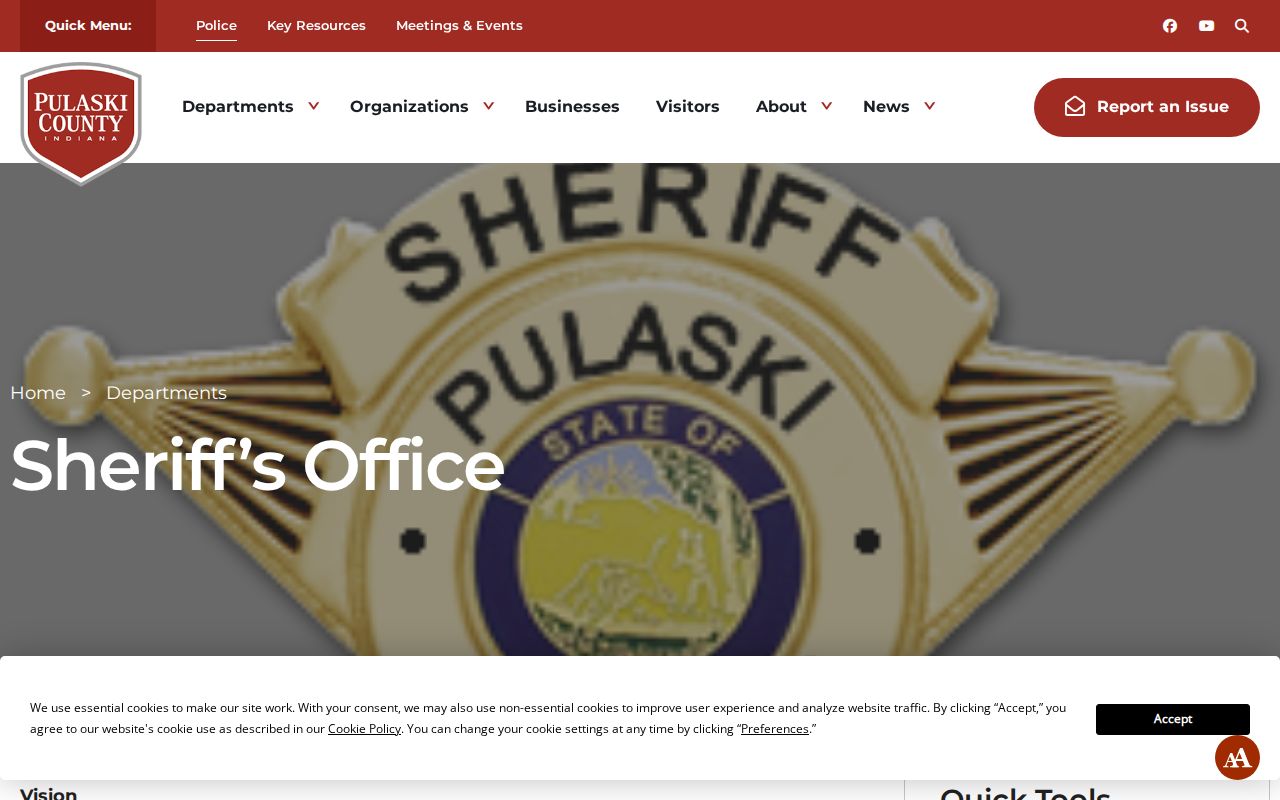
Call ahead to the Pulaski County Sheriff whenever surrender may be involved, since 911 is for emergencies rather than warrant records.
Pulaski Arrest Warrant Access Limits
The official MyCase access guidance explains the portal's online limits, including nonpublic cases and unavailable documents. Read it before assuming a missing file means a sealed one.
A blank result is not proof that no warrant exists. Pulaski County court-record access follows Indiana Access Rules 4 and 5, which govern both open records and protected information. If a file seems sealed, ask the Clerk for an official copy and the reason for any restriction.
Comparing Arrest, Summons, and Bench Warrants
Pulaski County courts use three tools that call for different responses. A summons tells you to appear without ordering an arrest first. A bench warrant usually follows a missed court duty instead.
| Feature | Arrest warrant | Summons | Bench warrant |
|---|---|---|---|
| Direction | Arrest and bring to court | Appear as ordered | Arrest on existing matter |
| Basis | Charge and probable cause | Formal notice | Missed obligation |
| Issuer | Judge | Court or authorized process | Judge |
| Response | Counsel, surrender, release | Attend on time | Seek court instructions |
Skip a summons in Pulaski County and a warrant can follow, so confirm the exact paper you hold rather than trust a loose label.
Pulaski Courts Control Arrest Warrants
Two courts here handle criminal matters. The Circuit Court sits in Justice Center room 225 at 574-946-3851, and Superior Court is in room 200 at 574-946-3371. The Clerk, at 574-946-3313, keeps the public files, and that official Circuit Court page shows the local contact setting for the court.
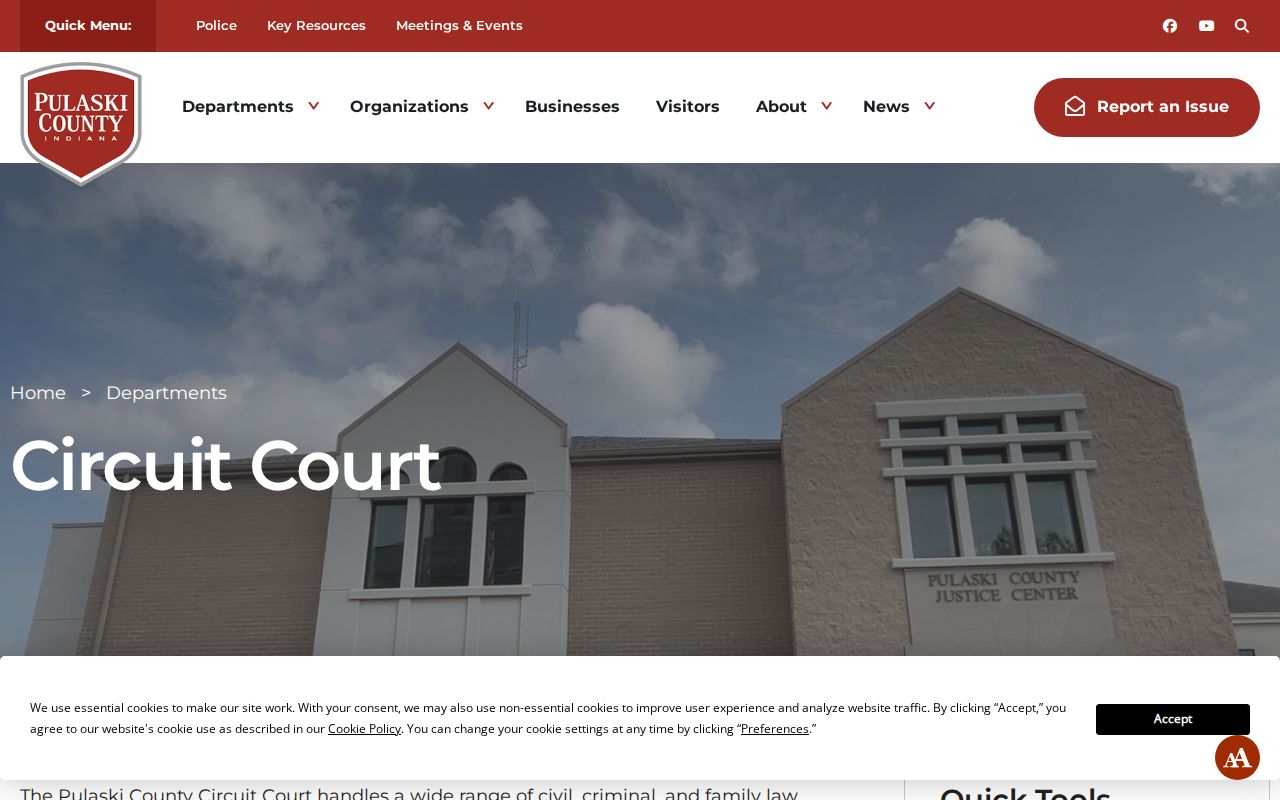
That Pulaski County court page points you to the issuing authority rather than a commercial list. The official MyCase landing screen carries the public case-search route.
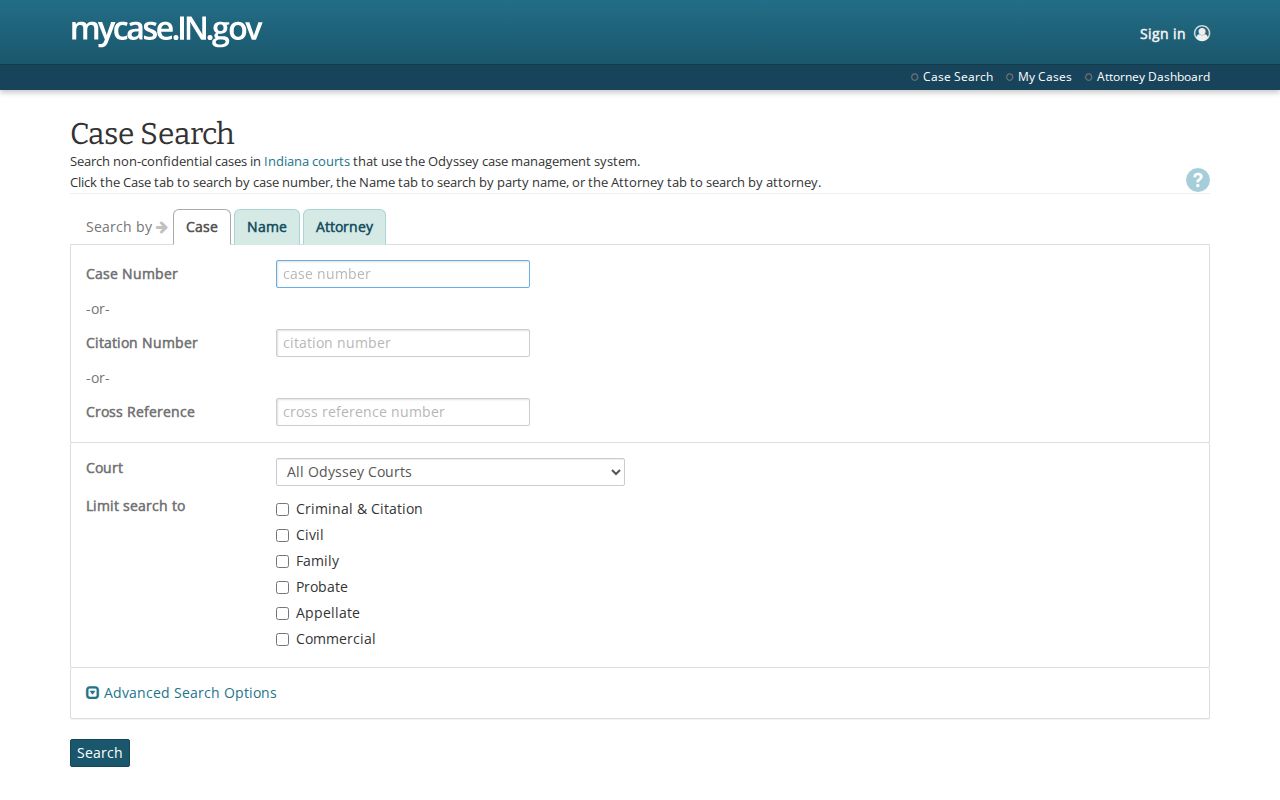
The MyCase portal offers case clues, not an all-warrant search or a final answer on status. Call the Pulaski County court instead. Ask whether the warrant is still active, whether a hearing is set, whether counsel could file something first, and whether a bond order exists. Staff can explain procedure, though not give legal advice.
Pulaski County Arrest Warrant Requests
Requests for Pulaski County records go through the Pulaski APRA form. It asks for your details, the agency, a description of the records, a date, and a signature. Copy fees may apply. APRA does not promise an unredacted warrant packet. Court access rules, a sealing order, an active investigation, or safety concerns can all limit release. If anything is denied, ask for the cited basis. Ask whether partial disclosure is possible. The form itself gives no warrant-specific email, fax, mail route, fee schedule, ID rule, or deadline, so confirm the submission method before sending anything. A records request also differs from a current-status check. Use the cause number with MyCase and the Pulaski County Clerk for the live case. The Sheriff answers only questions about service or custody. Ask the court whether a later order changed the warrant, and save each office's name and confirmation date with its answer.
Federal and Pulaski Arrest Warrants
A federal arrest warrant runs through a different court system. Pulaski County sits in the Northern District of Indiana, and the South Bend Division is the practical starting point in federal materials. County MyCase and the Pulaski Clerk cannot clear a federal order. Route those questions to the federal Clerk or the U.S. Marshals district office. Indiana e-Tax Warrants concern tax liens, not criminal custody. Knowing the jurisdiction keeps the warrant search out of the wrong database.
If There's an Arrest Warrant for You
Confirm the cause number, the issuing court, and the warrant's current status first. Then speak with a lawyer if you can. Ask the Pulaski County court about the required appearance, any motion to recall or quash, and the standing release order. Ask the Sheriff about safe voluntary surrender and booking.
Important: Do not evade service or approach a counter without instructions; counsel and the Sheriff can help plan a lawful surrender.
Pulaski County pretrial release follows Indiana Criminal Rule 2.6. A court may use nonmoney conditions or set cash or surety bail under the rule and its order. No official bond schedule exists. Paying a displayed amount does not itself prove the warrant is recalled.
Pulaski Arrest Warrant Freshness Check
A warrant event does not stay current on its own. A later service entry, hearing, recall, quash, release, or dismissal can change how the earlier event reads. Write down when you checked MyCase. Then ask the Pulaski County Clerk whether every recent entry has posted. If phone staff cannot confirm, ask what official copy or in-person process is available. A blank MyCase result is not clearance. A new matter may not have posted yet. Confidential or sealed information also will not display as an ordinary public case. The Sheriff may need to verify your identity before discussing execution details. Use official numbers, and treat any caller or message demanding immediate payment as suspect.
Pulaski Arrest Warrant Release Questions
Start with the issuing court on release questions. Ask whether bail has been set, whether it is cash or surety, whether nonmoney conditions apply, and whether a hearing is required. Indiana Criminal Rule 2.6 directs that release analysis. A generic online amount cannot replace the current Pulaski County order. The Pulaski County Clerk can explain official payment instructions. The Clerk cannot promise release beyond the order, though. The Sheriff can explain booking and custody steps but cannot negotiate bail. Counsel can interpret the choices and help arrange a lawful appearance. Keep each Pulaski County office in its role. Ask whether the release order sets a hearing date, supervision terms, travel limits, or another condition. Never infer an answer from a stale financial screen. If money bail is ordered, confirm the amount and accepted form. Save any official receipt. Ask which office records compliance on the docket. The court record, not a payment claim from an unknown caller, is the sound source.